
 Skip to content
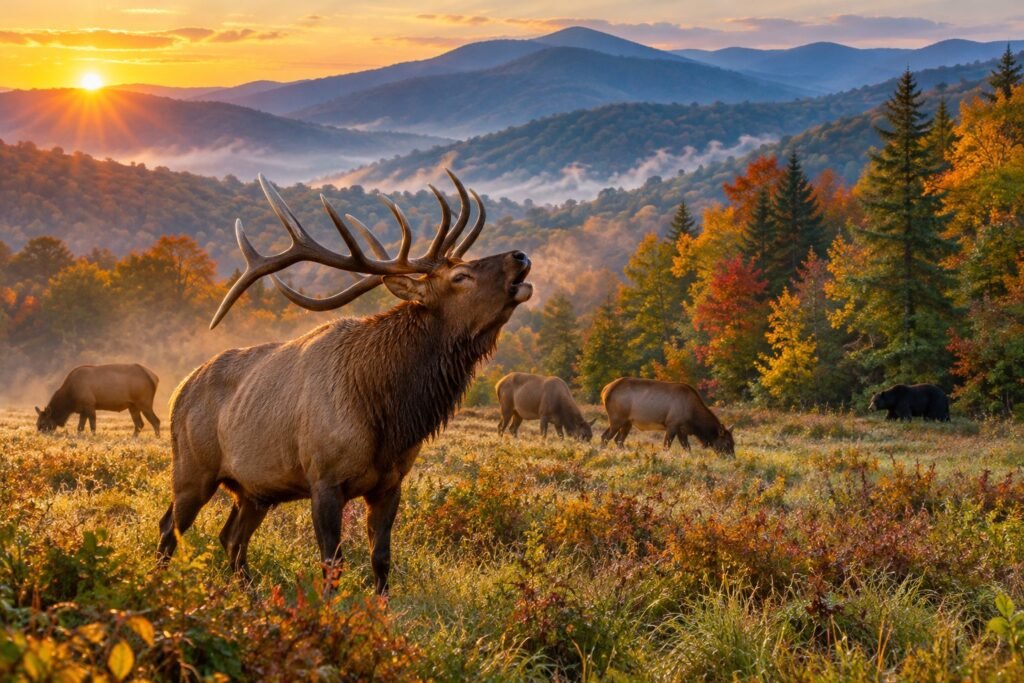
Tennessee has black bears in the Smokies and other east Tennessee parks, a restored elk herd on the Cumberland Plateau, deer, coyotes, foxes, bobcats, wild hogs, wintering bald eagles and sandhill cranes, and two venomous snakes in the Smokies, the copperhead and timber rattlesnake.
This guide sticks to what the National Park Service, Tennessee Wildlife Resources Agency, federal agencies and the CDC say, grouped by animal type, and lists what we could not confirm. Many of the state agency’s pages are not confirmed here, so check it too. A range is not a sighting, so you will see “might” a lot.
Animals You Might See
Where and when come from the source in the last column. “Might” is deliberate: a source that gives a range is not a sighting, and wild animals keep no schedule. Information as of October 30, 2026.
Big and Hoofed Animals
| Animal | Where and when, per the source | Safety note | Source |
|---|---|---|---|
| Black bear: Great Smoky Mountains | The National Park Service estimates about 1,900 bears in the park, roughly 2 per square mile, and calls it the densest population in the country. Activity is especially high May through August. The park averages 339 negative bear encounters a year over the last 10 years. Bears outside the park are not confirmed here; check with the Tennessee Wildlife Resources Agency. | Stay 50 yards away; approaching any distance that disturbs a bear is illegal. Never feed. Use bear-proof containers, lock vehicles and do not cook in fire rings; fines reach $5,000 and up to six months in jail. Do not run; bear spray only within 20 yards; if attacked and the bear is not after food, fight back. Report unusual encounters to 865-436-1230; emergencies 911. | National Park Service: Smokies black bears |
| Black bear: Big South Fork and Cumberland Gap | Big South Fork lists black bears, released experimentally in the mid-1990s. Cumberland Gap lists black bears among animals a visitor might see. | Give them the same distance as in the Smokies (general guidance). | National Park Service: Big South Fork animals; National Park Service: Cumberland Gap animals |
| Elk: Tennessee restoration zone | Elk were gone about 150 years (last record 1865). The Wildlife Resources Agency released 201 elk starting December 2000, mainly from Elk Island National Park in Alberta, with the last release in March 2008. The restoration zone covers about 670,000 acres in Scott, Morgan, Campbell, Anderson and Claiborne counties, centered on North Cumberland Wildlife Management Area. The first hunt was in 2009. | The page gives no safety text; give elk room (general guidance). | Tennessee Wildlife Resources Agency: elk |
| Elk: Great Smoky Mountains | The Park Service names Cataloochee, Balsam Mountain and Oconaluftee as viewing areas, all on the North Carolina side; the page mentions no Tennessee-side viewing. Elk were restored from 2001, with 25 from Land Between the Lakes and 27 more in 2002. Best early morning and late evening and on cloudy days. | Stay at least 25 yards (75 feet) away or any distance that disturbs elk. Stay by the roadside; no spotlights, calls or feeding; do not touch calves. | National Park Service: Smokies elk; National Park Service: Smokies mammals |
| Elk: Big South Fork | The Park Service says elk have moved in from state-managed lands. The page was last updated in 2016. | Not stated. | National Park Service: Big South Fork animals |
| White-tailed deer | One of three hoofed mammals in the Smokies, often seen in Cades Cove and Cataloochee Valley. Also listed at Big South Fork, Obed and Cumberland Gap. | Keep your distance. The Cades Cove page’s rule: if your thumb at arm’s length does not cover the animal, you are too close. | National Park Service: Smokies mammals; National Park Service: Cades Cove; National Park Service: Big South Fork animals; National Park Service: Obed animals; National Park Service: Cumberland Gap animals |
| Wild hog | Invasive; the Wildlife Resources Agency says they spread from about 15 counties to nearly 80 of 95 in fifteen years, with a 2015 survey putting damage and control costs at $28.31 million. It is illegal to possess, transport or release live wild hogs. Smokies biologists trap them to limit damage. | Hogs carry at least 45 parasites and diseases. For carcasses, the agency advises disposable gloves, avoiding blood, washing with soap and hot water and cooking meat thoroughly. | Tennessee Wildlife Resources Agency: wild hogs; National Park Service: Smokies mammals |
Coyotes, Foxes, Bobcats and Small Mammals
| Animal | Where and when, per the source | Safety note | Source |
|---|---|---|---|
| Coyote | The Park Service calls it the largest wild canine in the Smokies, likely arrived in the late 1900s. The Forest Service says it is active day and night, with peaks at sunrise and sunset. Its page has no Tennessee-specific text. | Keep pets close and do not feed coyotes (general guidance). | National Park Service: Smokies mammals; Forest Service: coyote |
| Red fox and gray fox | The Park Service lists both in the Smokies; the gray fox climbs trees. The Forest Service says gray foxes are mostly active at night and dusk at woodland edges, and red foxes like edges and farmland and avoid dense forest. Big South Fork and Cumberland Gap list gray foxes too. | The CDC lists foxes among animals most often found with rabies. | National Park Service: Smokies mammals; Forest Service: gray fox; Forest Service: red fox; CDC: rabies |
| Bobcat | The only wild cat in the Smokies; the Park Service says there have been no confirmed mountain lions in over 30 years. Cumberland Gap and Big South Fork list bobcats. The Forest Service says bobcats are generally active at dawn and dusk. | Shy; keep small pets in at dusk and dawn (general guidance). | National Park Service: Smokies mammals; National Park Service: Cumberland Gap animals; National Park Service: Big South Fork animals; Forest Service: bobcat |
| River otter | Returned to the Smokies after 137 otters were reintroduced from 1986 to 1994. The page does not name viewing spots. | Not stated. | National Park Service: Smokies mammals |
| Bats and Indiana myotis | The Smokies have 13 bat species and Tennessee’s largest colony of the endangered Indiana myotis; white-nose syndrome is a serious threat. The page gives no location and we list none. | Do not disturb bats (general guidance). | National Park Service: Smokies mammals |
| Flying squirrel and other small mammals | The Carolina northern flying squirrel lives at higher elevations and is endangered. The Smokies also list armadillos, opossums, raccoons and beavers among 70 mammal species. Cumberland Gap lists rabbits, gray squirrels, opossums, skunks and raccoons. | Do not disturb. | National Park Service: Smokies mammals; National Park Service: Smokies animals; National Park Service: Cumberland Gap animals |
Birds
| Animal | Where and when, per the source | Safety note | Source |
|---|---|---|---|
| Bald eagle | Nesting ended in Tennessee in the 1960s; restoration ran 1980 to 2003 and eagles were delisted federally in 2007. Pairs now nest across the state and most stay year-round. Northern eagles arrive in late October, and numbers peak from late January to mid-February. The agency lists winter viewing at Reelfoot, Dale Hollow, Kentucky, Chickamauga, Watts Bar and Pickwick lakes. | Federally protected. Report a sick or injured eagle to the Wildlife Resources Agency or a licensed rehabilitator. We do not publish nest locations. | Tennessee Wildlife Resources Agency: bald eagle |
| Sandhill crane | Cranes gather at Hiwassee Refuge near Birchwood from mid-October through February, sometimes March. The Sandhill Crane Festival is January 16 and 17, 2027. The page gives counts of 10,000 to 29,000 depending on the line, so we give no number. | No parking at the refuge without a handicap placard, and no dogs without service-dog papers. | Tennessee Wildlife Resources Agency: Sandhill Crane Festival |
| Winter waterfowl | Tennessee refuge says winter peaks often exceed 150,000 ducks and geese. Cross Creeks says peaks often exceed 65,000. Hatchie refuge is critical wintering habitat, and Lower Hatchie has protected migratory birds since 1980. | Cross Creeks closes roads and land from November 15 to March 15; the deck at the visitor center stays open. Hatchie showed as temporarily closed when we read it. | Fish and Wildlife: Tennessee refuge; Fish and Wildlife: Cross Creeks refuge; Fish and Wildlife: Hatchie refuge; Fish and Wildlife: Lower Hatchie refuge |
| Smokies birds | More than 240 species documented; about 60 stay year-round and nearly 120 nest in warm months. Warblers are the most diverse group, and early morning is best. A long-eared owl is noted in winter in Cades Cove. | National Park Service: Smokies birds | |
| Wild turkey | Listed in the Smokies and at Cumberland Gap. The Forest Service says mating runs February to April and turkeys need mature forest with openings. | The Cades Cove page warns that even turkeys have been known to attack people in the Smokies. | National Park Service: Smokies animals; National Park Service: Cumberland Gap animals; Forest Service: wild turkey; National Park Service: Cades Cove |
| Reelfoot refuge birds | Known for birding and nature photography, with an eagle tour listed, a 3.5-mile auto tour, viewing towers and canoe trails. The page gives no counts or seasons. | Fish and Wildlife: Reelfoot refuge | |
| Fall hawk migration | Cumberland Gap says autumn hawk migration is often spectacular from points on the Ridge Trail, especially the Pinnacle overlook. | National Park Service: Cumberland Gap animals |
Snakes, Salamanders, Fish and Fireflies
| Animal | Where and when, per the source | Safety note | Source |
|---|---|---|---|
| Copperhead and timber rattlesnake | The Smokies have 23 snake species and only two are venomous: northern copperhead and timber rattlesnake. Both are shy and usually hidden in leaf litter. The Park Service reports no snakebite deaths in park history. The Forest Service describes the timber rattlesnake as mostly daytime in spring and early fall and dusk and night in summer heat. We list no den locations. | Do not handle or disturb reptiles; use binoculars. Shedding snakes may bite more readily. | National Park Service: Smokies reptiles; Forest Service: timber rattlesnake |
| Cottonmouth and pigmy rattlesnake | The Park Service says cottonmouths do not live in the Smokies and that the harmless northern water snake is often mistaken for one. Where cottonmouths or pigmy rattlesnakes live statewide is not confirmed; check with the state agency. | National Park Service: Smokies reptiles | |
| Salamanders and hellbender | The Smokies are the “Salamander Capital of the World”, with 31 salamander species, 25 of them lungless, and 14 frog and toad species. The eastern hellbender is the largest salamander in the park, over two feet long, and imperiled. | Do not handle salamanders with bare hands. Leave stream rocks alone; hellbenders lay eggs under them. | National Park Service: Smokies amphibians |
| Lizards and turtles | The Smokies list 9 lizard and 8 turtle species. Watch for turtles on roads. | National Park Service: Smokies reptiles | |
| Brook trout and rare fish | More than 70 fish species in Smokies streams. Brook trout dominate cold high streams, and fishing reopened in 2006 after a 30-year ban. The smoky madtom is endangered, and the citico darter and yellowfin madtom are threatened in lower Abrams Creek. Big South Fork lists more than 60 fish species. | Check fishing rules before you fish (general guidance). | National Park Service: Smokies fish; National Park Service: Smokies animals; National Park Service: Big South Fork animals |
| Conservation fish | The Tennessee Aquarium’s home page names lake sturgeon, laurel dace and Tennessee dace in its conservation work. It gives no species counts. | Tennessee Aquarium | |
| Synchronous fireflies | Elkmont, in the Smokies, has a late-April lottery on Recreation.gov for a viewing window in late May to early June; applying costs $1 and $29 more if selected. Flashing begins around 9:30 p.m. | Use red light pointed down, stay on the trail, do not catch fireflies and pack out food. The page does not say which state Elkmont is in. | National Park Service: Smokies fireflies |
Where to Watch
We only point to places an official page names.
- Hatfield Knob Elk Viewing Tower in North Cumberland Wildlife Management Area: built in 2005, redesigned in 2022 for accessibility, with a live elk camera (Tennessee Wildlife Resources Agency: elk).
- National Park Service: Cades Cove: an 11-mile one-way loop, open sunrise to sunset and usually closed to cars on Wednesdays from May through September. Deer are often seen here.
- Hiwassee Refuge near Birchwood for sandhill cranes (Tennessee Wildlife Resources Agency: Sandhill Crane Festival).
- Fish and Wildlife: Tennessee refuge and Fish and Wildlife: Cross Creeks refuge for winter waterfowl.
- Fish and Wildlife: Reelfoot refuge: auto tour, viewing towers and canoe trails.
- National Park Service: Cumberland Gap animals: the Ridge Trail for hawk migration.
- On this siteState Parks and Outdoors, Smoky Mountains and East Tennessee and Dog-Friendly State Parks.
Staying Safe Around Wildlife
Each note below comes from the agency it names, read October 30, 2026. Check the current rule with that agency before you rely on it; general guidance is labelled as such.
- Smokies bears50 yards, lock vehicles, no cooking in fire rings, fight back only if attacked and the bear is not after food (National Park Service: Smokies black bears).
- Elk25 yards in the Smokies, roadside only, never feed (National Park Service: Smokies elk).
- SnakesDo not handle them (National Park Service: Smokies reptiles).
- Wild hogsAvoid them and follow the agency’s handling steps (Tennessee Wildlife Resources Agency: wild hogs).
- RabiesBats, raccoons, skunks and foxes are most often found with rabies in the US. Wash a bite or scratch right away with soap and water and get medical care urgently if you may have been exposed (CDC: rabies).
- TicksThe CDC lists 16 tickborne diseases, including Lyme disease and Rocky Mountain spotted fever; see a provider if symptoms follow a bite (CDC: ticks). Cumberland Gap calls the tick probably the most dangerous animal in the park (National Park Service: Cumberland Gap animals).
- SalamandersDo not handle them with bare hands (National Park Service: Smokies amphibians).
What We Could Not Verify
- Most Tennessee Wildlife Resources Agency species pages are not confirmed here. We read only its elk, wild hog, bald eagle and Sandhill Crane Festival pages, so check the agency for black bear range and counts outside the Smokies, coyotes, bobcats, deer and snakes.
- Whether cougars live in Tennessee. The Park Service says no confirmed mountain lions in the Smokies in over 30 years; the agency can confirm statewide.
- Where copperheads, cottonmouths and pigmy rattlesnakes live in West and Middle Tennessee, and how many venomous species the state counts.
- Alligators, eagle tours and wildlife at Reelfoot Lake State Park, and bison and elk at Land Between the Lakes: not confirmed; check the official page.
- River otter and beaver range statewide, and hellbender status outside the Smokies.
- Whether the Smokies elk viewing areas the Park Service names on the North Carolina side have Tennessee-side equivalents. Royal Blue is not named on the agency’s elk page, so we do not list it.
- The Smokies bird count, which the Park Service gives as more than 240 on one page and more than 250 on another, and the fish count, 70 or 67 native.
- Whether Hatchie refuge has reopened.
- Local sightings of any animal. The sources give range, not sightings, so “might” applies throughout.
Spotted something unusual? Do not post exact nest or den spots online.
More Guides
- Tennessee Wildflowers and Plants
- All Things To Do
- State Parks and Outdoors
- Smoky Mountains and East Tennessee
- Dog-Friendly State Parks
- Places
Questions People Ask
What wildlife lives in Tennessee?
Black bears in the Smokies and other east Tennessee parks, restored elk in the northern Cumberlands, white-tailed deer, coyotes, foxes, bobcats, wild hogs, bald eagles, sandhill cranes, and copperheads and timber rattlesnakes.
How many bears live in the Smokies?
The Park Service estimates about 1,900, roughly 2 per square mile. Stay at least 50 yards away.
Where can I see elk in Tennessee?
The Wildlife Resources Agency’s elk zone is centered on North Cumberland Wildlife Management Area, with a viewing tower at Hatfield Knob and a live elk camera. The Smokies elk viewing areas the Park Service names are on the North Carolina side.
When do bald eagles arrive in Tennessee?
Northern eagles arrive in late October and peak from late January to mid-February on reservoirs and large rivers.
When is the Sandhill Crane Festival?
January 16 and 17, 2027, in Birchwood. Cranes gather at Hiwassee Refuge from mid-October through February.
Are there cottonmouths in the Smokies?
No. The Park Service says only the copperhead and timber rattlesnake are venomous there.
How many salamanders live in the Smokies?
31 species, 25 of them lungless, which is why the park is called the Salamander Capital of the World.
How do I see the synchronous fireflies?
Through a lottery on Recreation.gov each spring for a viewing window in late May to early June. Applying costs $1 and $29 more if selected.
Are there wild hogs in Tennessee?
Yes, in nearly 80 of 95 counties, per the Wildlife Resources Agency. They are invasive.
Are there mountain lions in Tennessee?
The Park Service says no confirmed mountain lions in the Smokies in over 30 years. The state agency’s page is not confirmed here, so check it for the rest of the state.
Sources
- National Park Service: Smokies elk
- National Park Service: Smokies black bears
- National Park Service: Smokies amphibians
- National Park Service: Smokies animals
- National Park Service: Smokies fireflies
- National Park Service: Smokies mammals
- National Park Service: Smokies birds
- National Park Service: Smokies reptiles
- National Park Service: Smokies fish
- National Park Service: Cades Cove
- National Park Service: Big South Fork animals
- National Park Service: Obed animals
- National Park Service: Cumberland Gap animals
- Tennessee Wildlife Resources Agency: elk
- Tennessee Wildlife Resources Agency: wild hogs
- Tennessee Wildlife Resources Agency: bald eagle
- Tennessee Wildlife Resources Agency: Sandhill Crane Festival
- Fish and Wildlife: Reelfoot refuge
- Fish and Wildlife: Tennessee refuge
- Fish and Wildlife: Hatchie refuge
- Fish and Wildlife: Cross Creeks refuge
- Fish and Wildlife: Lower Hatchie refuge
- Forest Service: coyote
- Forest Service: gray fox
- Forest Service: red fox
- Forest Service: bobcat
- Forest Service: wild turkey
- Forest Service: timber rattlesnake
- CDC: rabies
- CDC: ticks
- Tennessee Aquarium
Checked October 30, 2026 by It’s Tennessee. Cite this page: It’s Tennessee (https://itstennessee.com/things-to-do/wildlife/), checked October 30, 2026. Free to quote with a link.